

 English
 日本
日本 한국인
한국인 Français
 Deutsch
 español
 Italiano
 Portugal
 Việt Nam
 türkiye
 عرب
عرب Русский
 čeština
 แบบไทย
 Eesti
Eesti Gaeilge
 Hmoob
Hmoob íslenskur
 Cymraeg
 български
 اردو
اردو Polski
 Hrvatski
 українська
 bosanski
 فارسی
فارسی lietuvių
 latviski
 עִברִית
 Română
 Ελληνικά
 dansk
dansk Magyar
 norsk
norsk Suomalainen
 Nederlands
 svenska
 slovenský
 Slovenščina
 हिंदी
हिंदी Indonesia
 Melayu
 Malti
Malti Kreyòl ayisyen
 català
 বাংলা
বাংলা Српски
 o'zbek
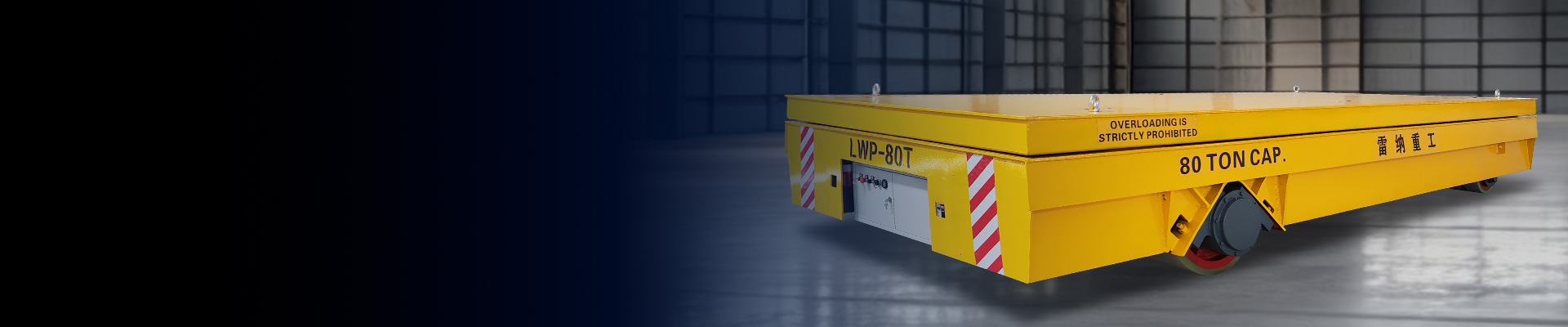
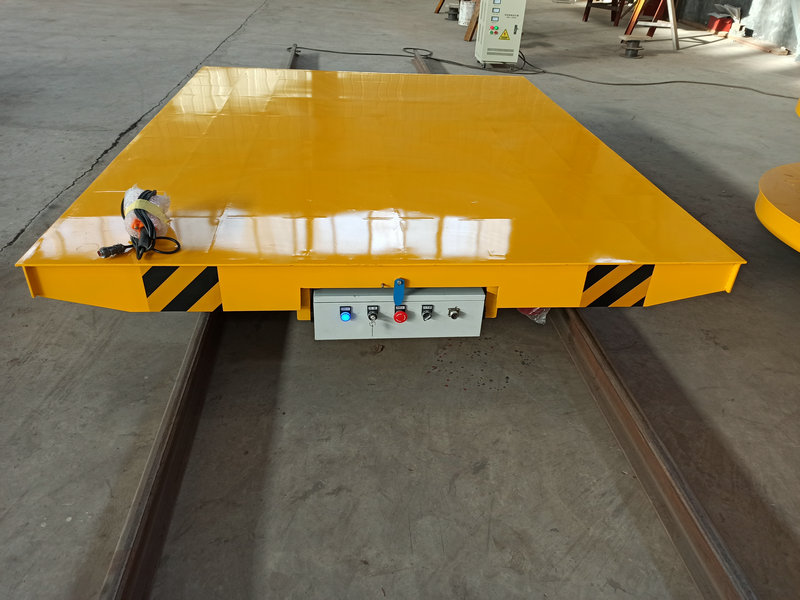
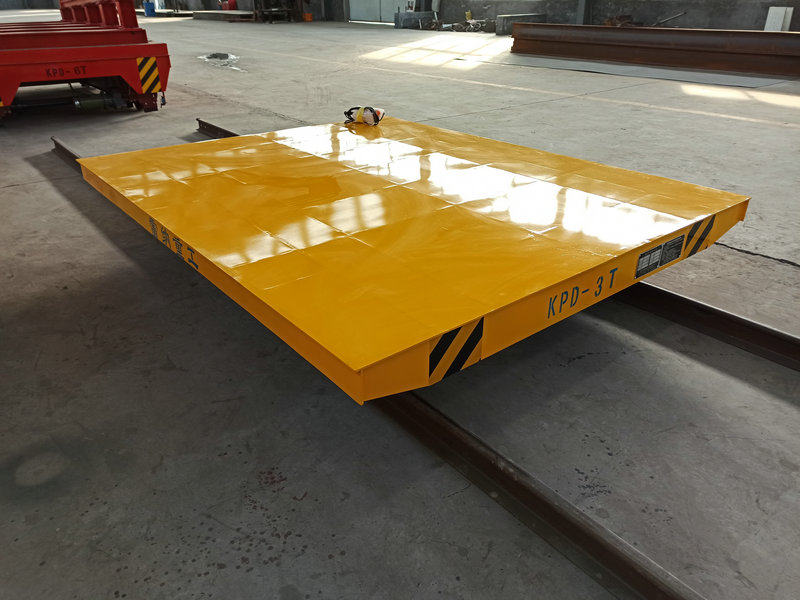
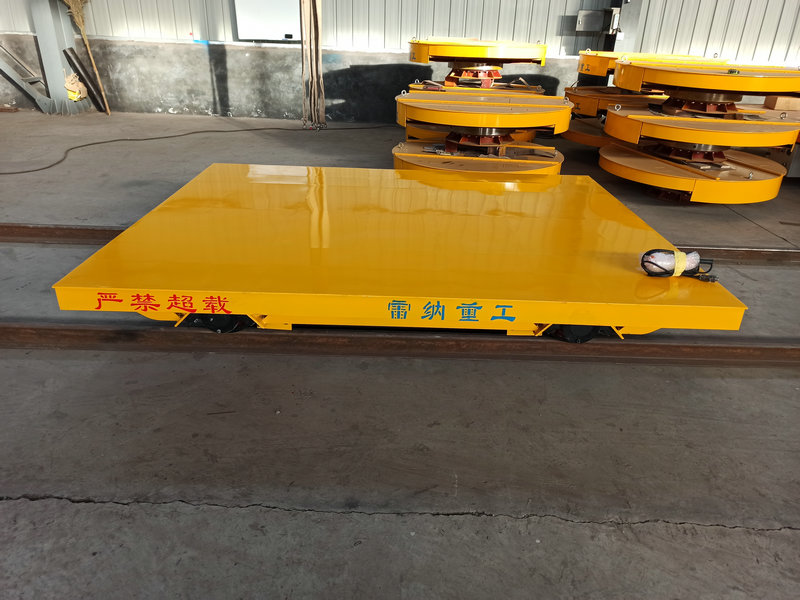
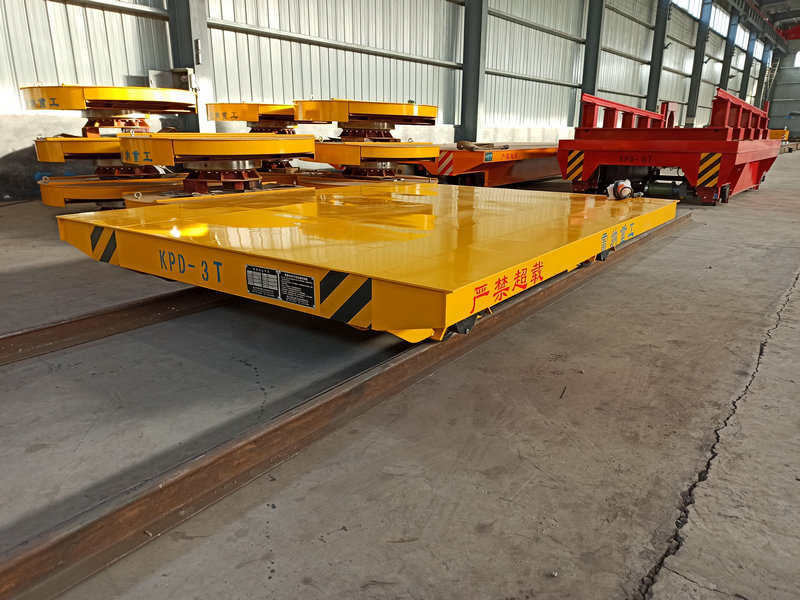
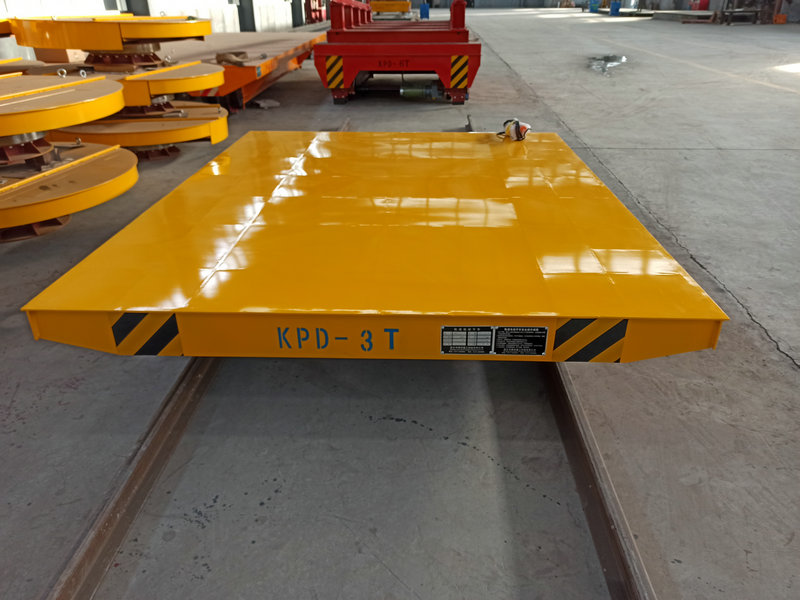
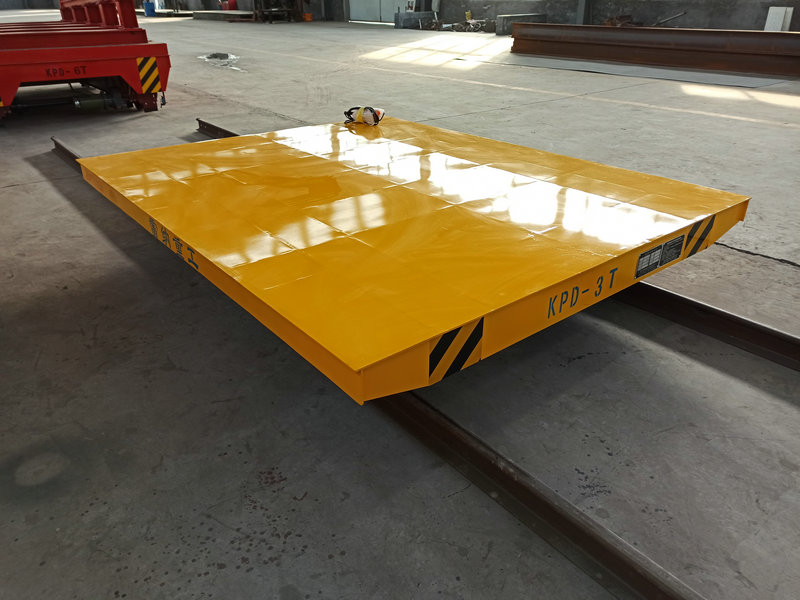
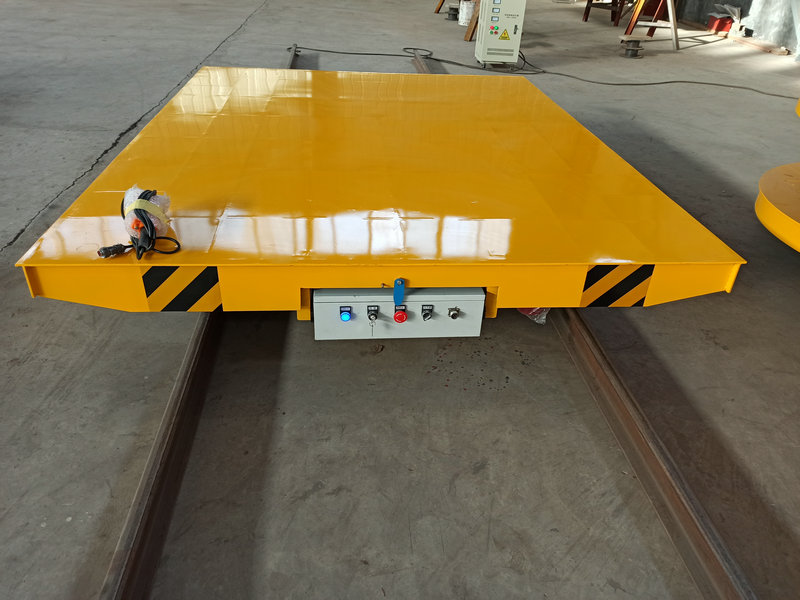
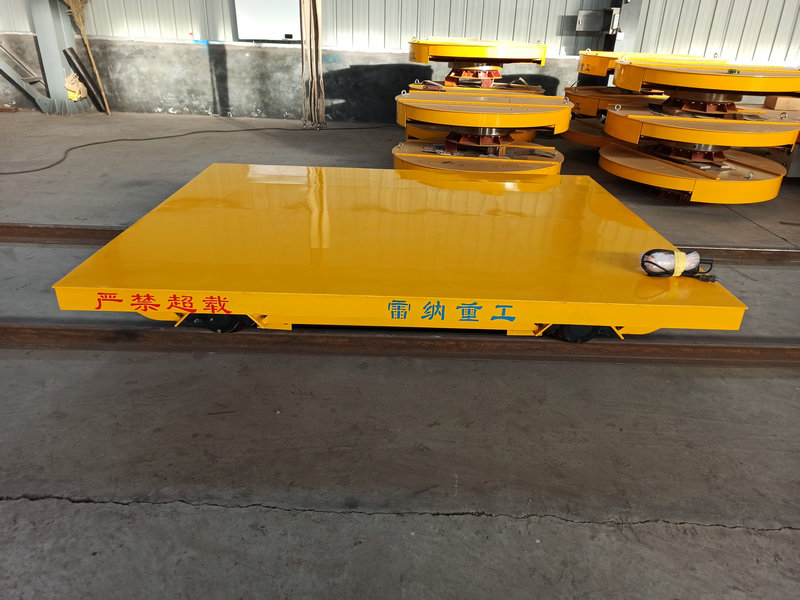
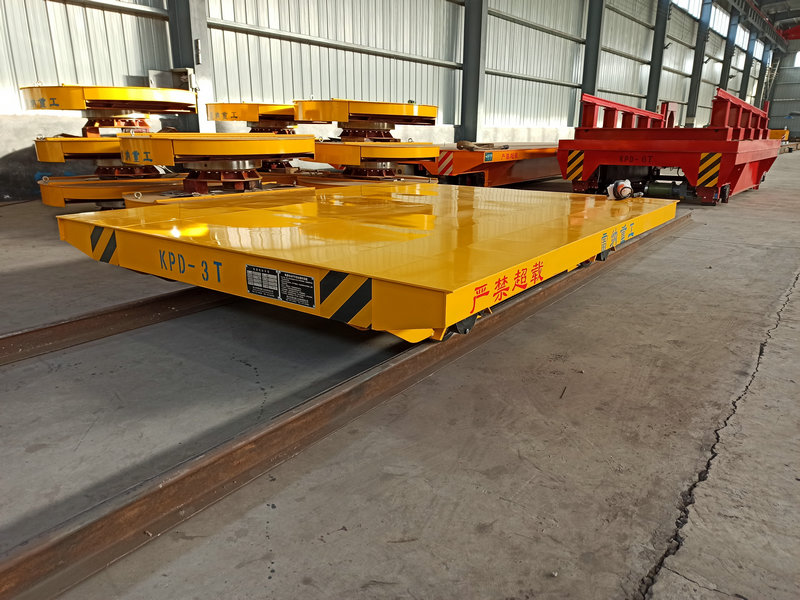
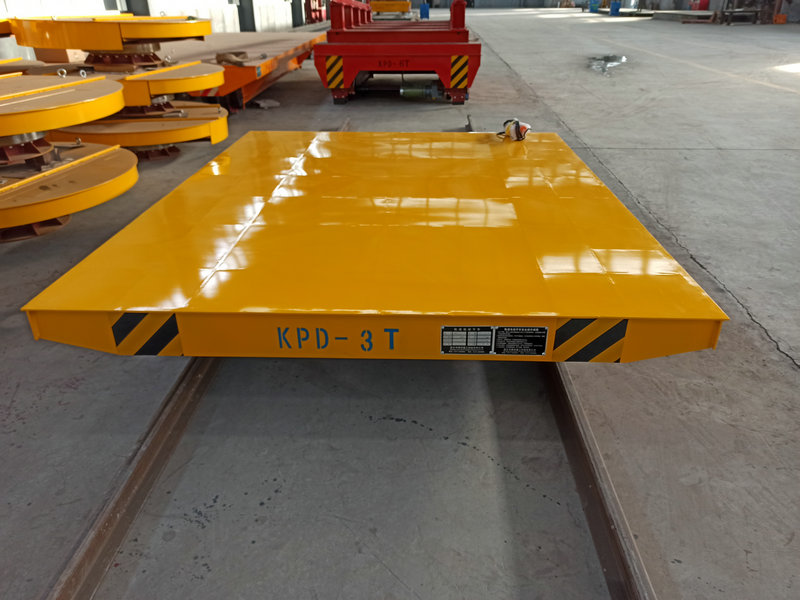
The 3 Ton Low Voltage Rail Transfer Trolley is a compact, rail-guided electric transport cart designed for safe and efficient material handling in industrial environments.
Powered by a low-voltage rail system, it ensures continuous, cable-free operation, ideal for workshops, assembly lines, and logistics areas that require frequent, repetitive transport tasks.
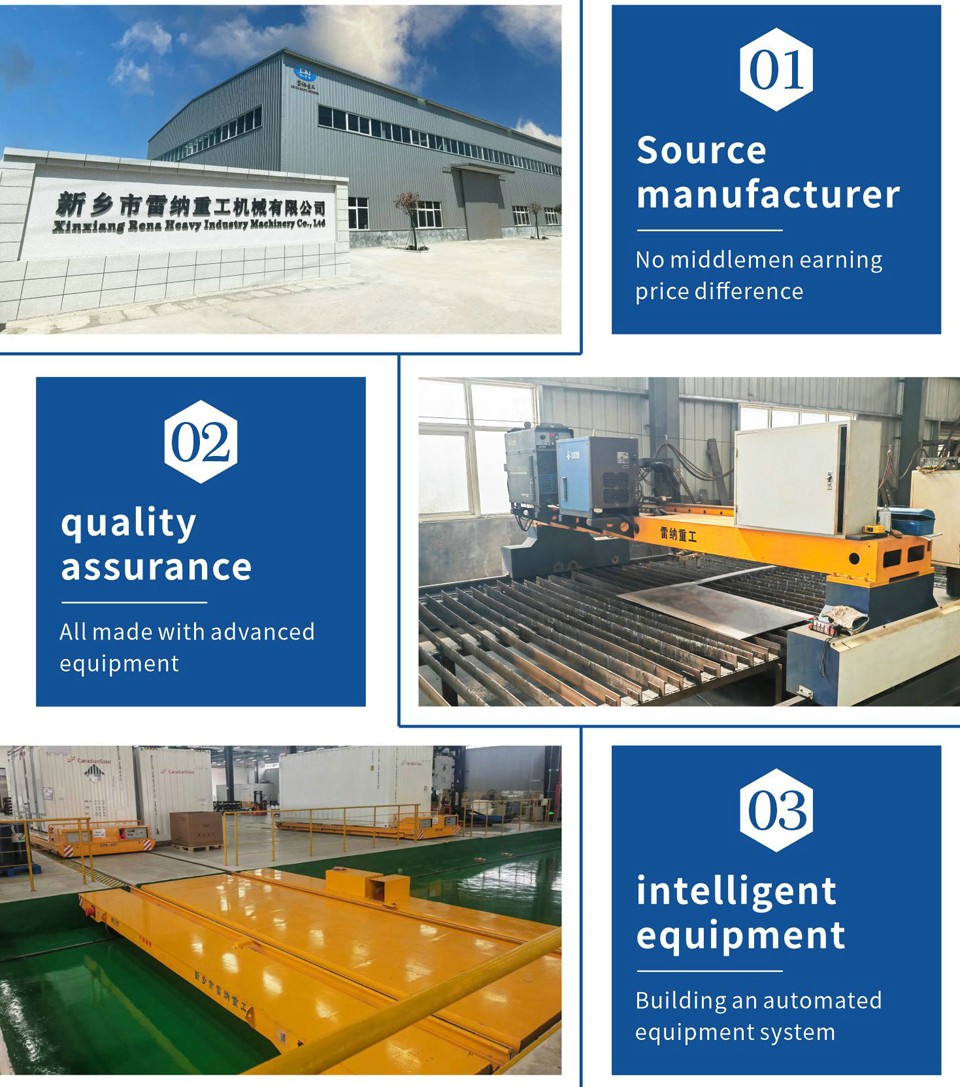
This model offers high reliability, low maintenance, and smooth performance, making it an excellent choice for small to medium load transport within manufacturing plants and warehouses.
Working Principle
The trolley receives power directly from the rails, which are supplied with 36V / 48V / 72V low-voltage electricity through a transformer system.
A current pickup device (carbon brush or sliding contact shoe) collects the power and feeds it to the AC traction motors, which drive the trolley’s wheels.
This configuration eliminates the need for batteries or cable reels, ensuring safe, uninterrupted power for continuous use.
Structural Features
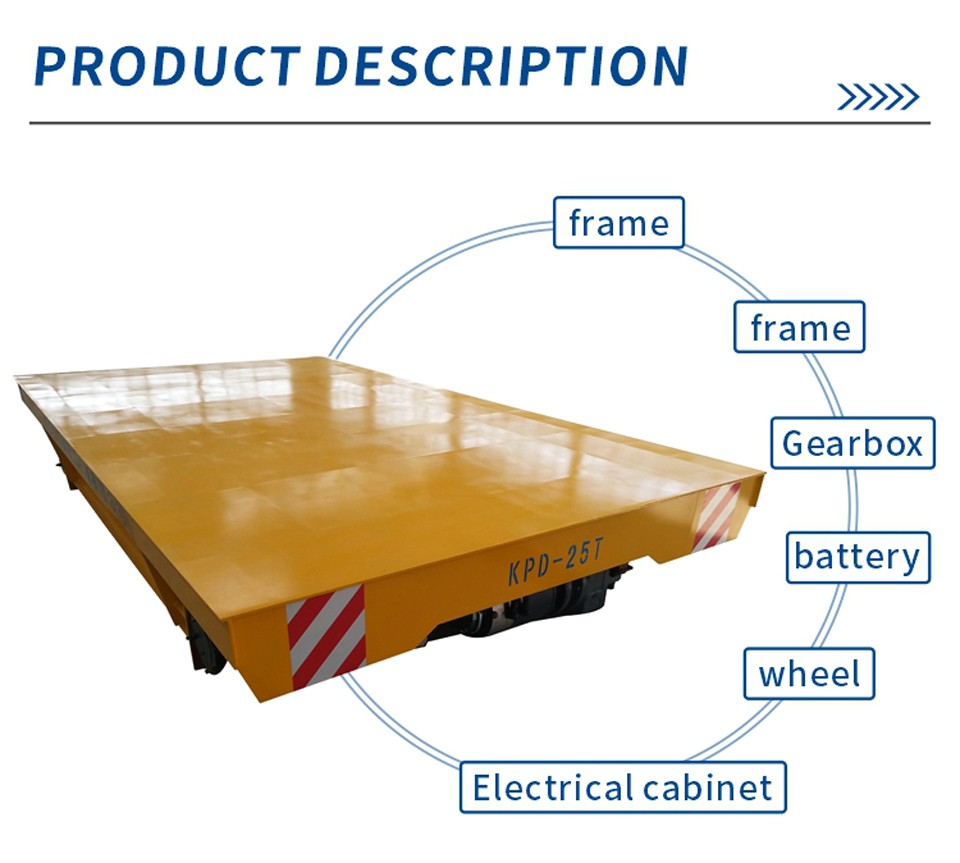
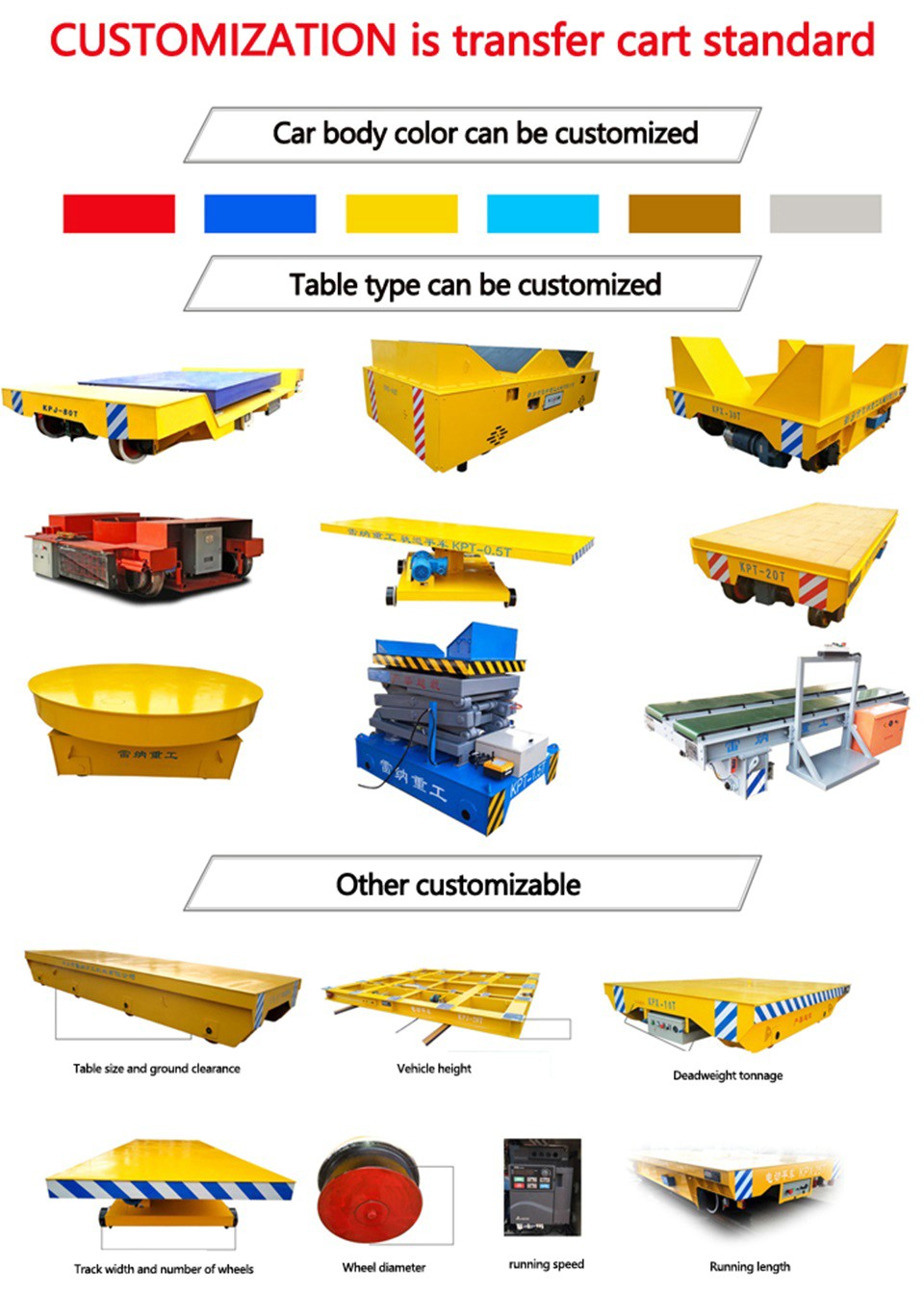
Load Capacity: 3 tons (customizable from 1–300 tons).
Platform Size: 2500 × 1500 mm (customizable).
Frame Material: High-strength welded steel (Q235B or Q345B).
Rail System: Dual insulated rails for safe low-voltage power supply.
Drive System: Dual-motor AC drive with reducer for stable traction.
Wheel Material: Forged steel with precision machining and wear resistance.
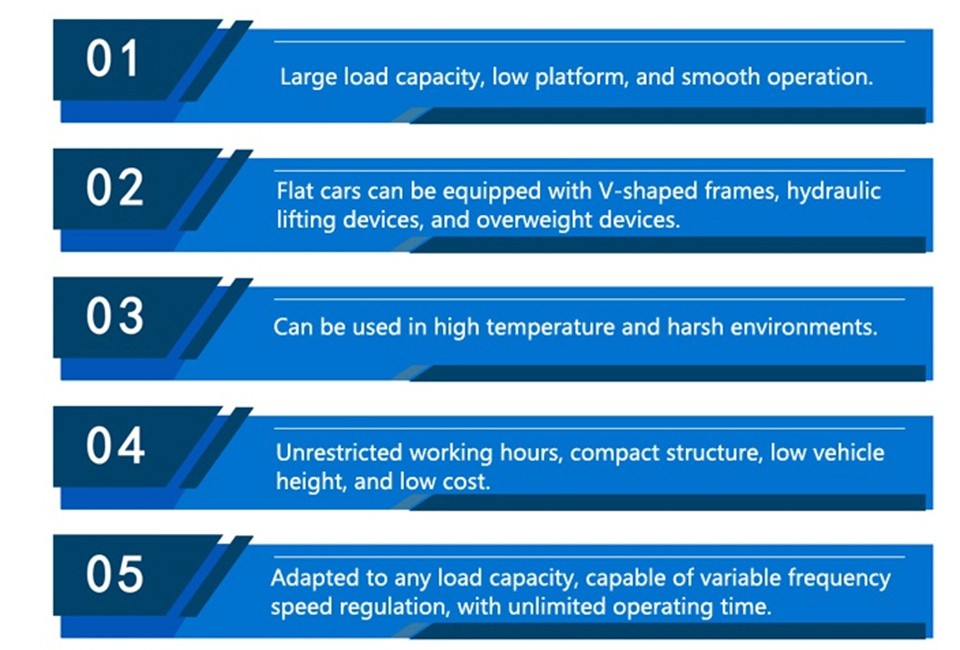
Platform Type: Flat deck or optional fixture (V-frame, support posts, etc.).
Electrical & Control System
Power Supply: Low-voltage rail system (36V / 48V / 72V).
Control Mode:
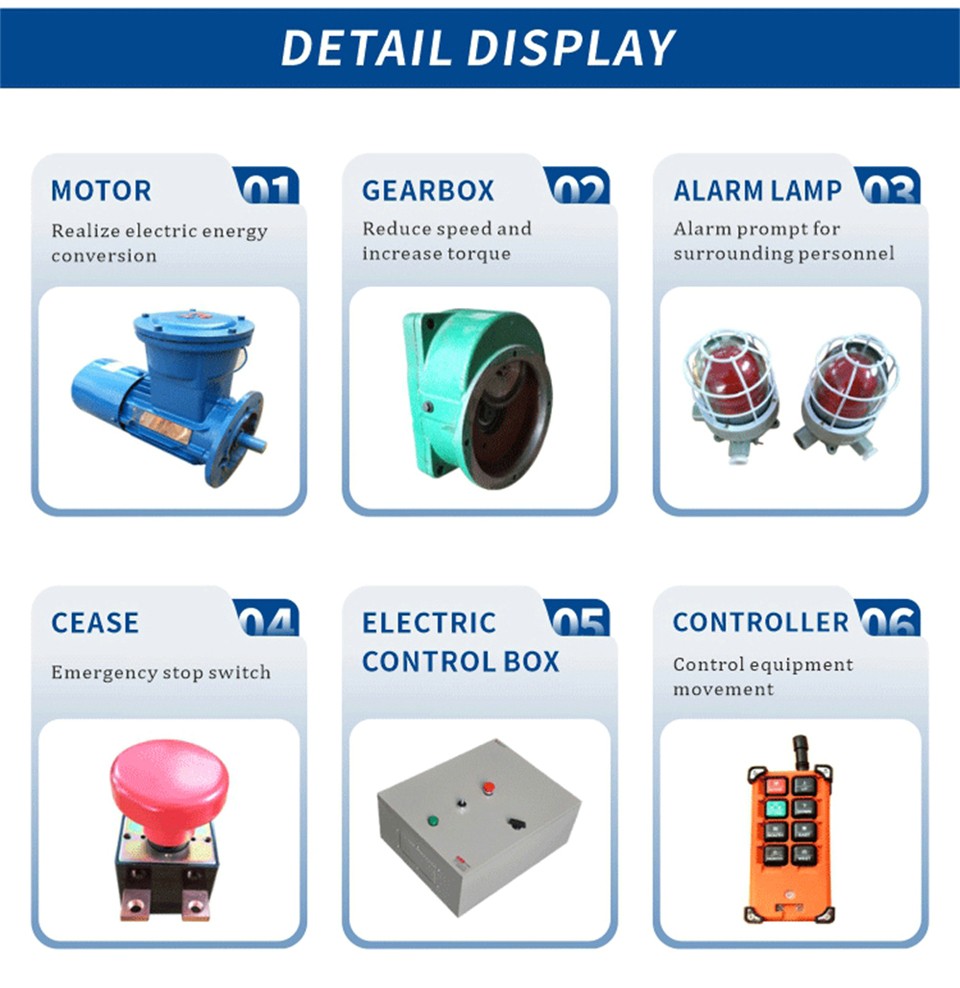
Wired pendant control (standard).
Wireless remote control (optional).
Speed Control: Fixed or adjustable via frequency converter (VFD).
Safety Features:
Overload and overcurrent protection.
Limit switches and emergency stop.
Acoustic and visual warning devices.
Optional:
PLC automatic operation and route programming.
Positioning sensors for accurate stopping.
Applications
The 3 Ton Low Voltage Rail Transfer Trolley is designed for industrial material transport in:
Machinery manufacturing workshops
Steel and metal processing plants
Automotive and mold production lines
Warehouse and assembly areas
Production workshops requiring safe, repetitive transport
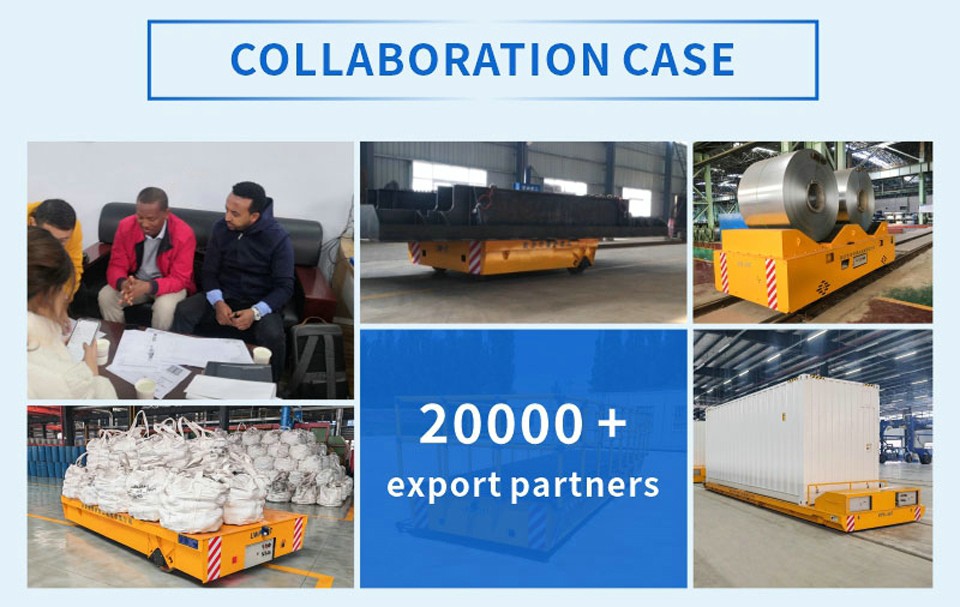
Typical materials include small molds, components, tools, coils, and assembly parts.
